
Which Ford Transit Is Best for HVAC Contractors?
For HVAC contractors, a work van is more than transportation. It needs to carry tools, replacement parts, equipment, ladders, refrigerant, and everything else needed to get the job done. It also needs to be comfortable enough for long days on the road and capable of handling the demands of daily commercial use.
The Ford Transit is a strong choice for HVAC professionals because it offers multiple configurations, roof heights, lengths, engines, and drivetrain options. That flexibility makes it possible to build a Transit around the way your business actually works.
So, which Ford Transit is best for HVAC contractors? The answer depends on your equipment, how much you carry, and where you typically work.
Start With the Cargo Van
For most HVAC contractors, the Transit Cargo Van is the logical starting point. Unlike a passenger van, it gives you a dedicated cargo area that can be organized around your tools and equipment.
The 2026 Transit Cargo Van is available in multiple configurations, with cargo volume ranging from about 246.7 to 487.3 cubic feet depending on the configuration. Maximum payload can reach 5,103 pounds in a properly equipped configuration.
That flexibility is particularly useful for HVAC businesses. One technician may primarily need hand tools and replacement parts, while another may need space for larger components, recovery equipment, ladders, and additional inventory.
A well-organized cargo van can also help technicians spend less time looking for equipment and more time working. Shelving, bins, drawers, and specialized storage can be installed to create a mobile workspace tailored to your business.
Which Roof Height Should You Choose?
Roof height is one of the most important decisions for an HVAC contractor.
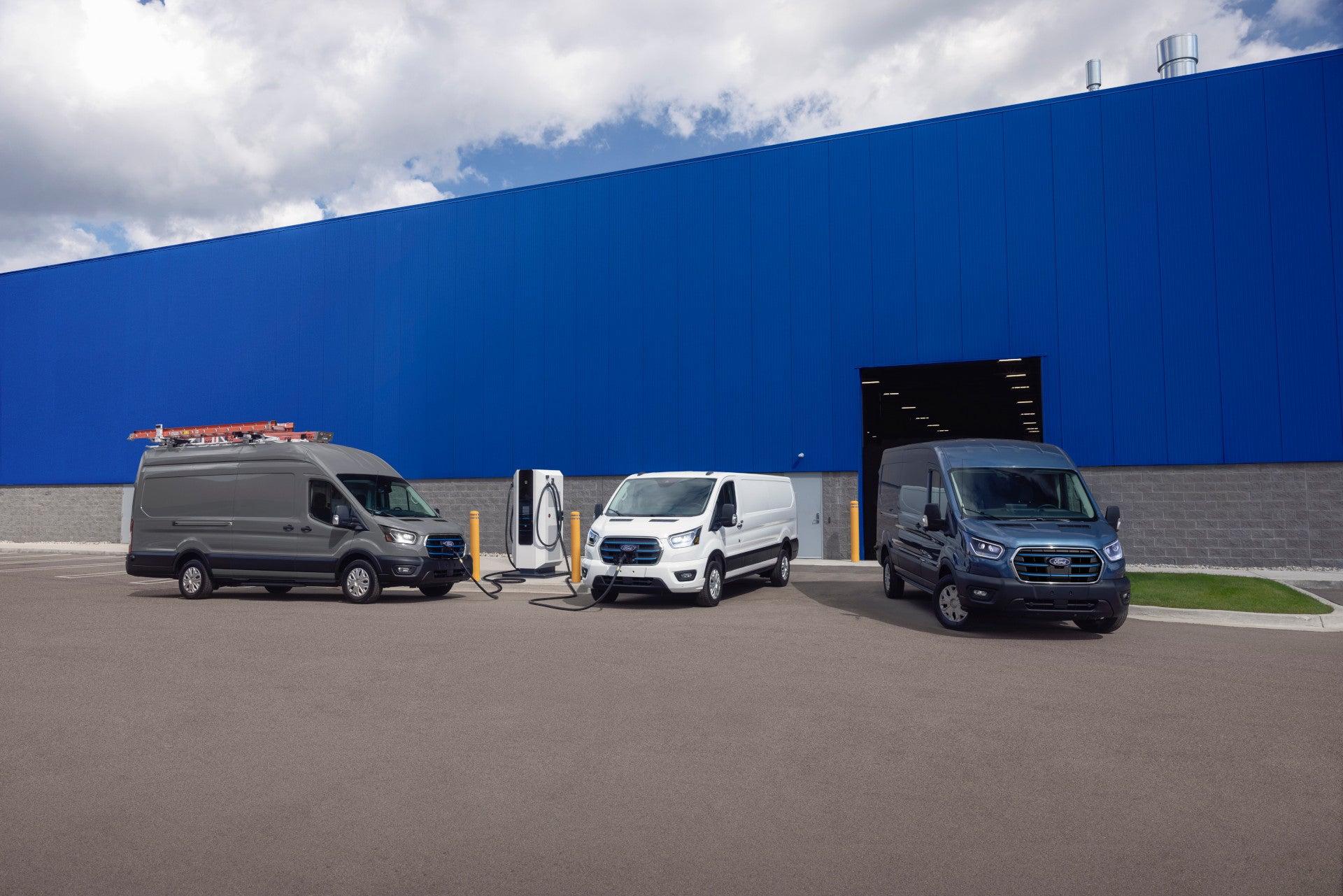
The Transit is available with low-, medium-, and high-roof configurations. The low roof is easier to maneuver in areas with height restrictions, while the medium and high roofs provide additional vertical space.
For HVAC contractors, a medium-roof Transit can be an excellent middle ground. It provides more usable interior height while remaining practical for everyday driving. If your technicians frequently move around inside the van or your business carries tall equipment and extensive shelving, the high roof may be worth considering.
A low-roof model can make more sense for contractors who spend most of their time in dense urban areas, parking garages, or locations where overall vehicle height is a concern.
Think about how you work before choosing. If your van doubles as a mobile workshop, being able to stand and move around inside can make a noticeable difference over the course of a workday.
Choosing the Right Length
The Transit also gives contractors a choice of body lengths and wheelbases. A longer van provides additional room for inventory and equipment, but a shorter configuration can be easier to maneuver around residential streets and crowded job sites.
If your HVAC business primarily handles residential service calls, you may not need the largest available Transit. A shorter configuration can provide plenty of room for everyday tools and commonly needed parts while remaining relatively easy to drive and park.
For contractors handling commercial HVAC installations or carrying larger quantities of equipment and parts, a longer Transit can provide valuable additional cargo space.
The key is to avoid paying for more van than you need while leaving enough room for your typical workload.
3.5L Engines for HVAC Work
The 2026 Ford Transit offers two gasoline engine choices: a 3.5-liter PFDi V6 and a 3.5-liter EcoBoost V6. The PFDi engine produces 275 horsepower and 260 lb.-ft. of torque, while the EcoBoost produces 300 horsepower and 400 lb.-ft. of torque. Both are paired with a 10-speed automatic transmission.
For many HVAC contractors, the standard 3.5-liter V6 provides sufficient capability for everyday service work. If your van regularly carries heavy loads or you tow a trailer with additional equipment, however, the 3.5-liter EcoBoost can be an attractive upgrade.
The EcoBoost's additional torque can be helpful when the van is loaded with equipment or when you're driving through hilly areas. It can also provide extra flexibility for contractors whose businesses require more frequent towing.
Is AWD Worth It?
For contractors who work year-round, available Intelligent All-Wheel Drive is another option worth considering.
The Transit is offered with rear-wheel drive as standard, while available AWD is designed to improve traction and handling.
AWD can be particularly useful for HVAC contractors who work in areas with snow, ice, rain, or unpaved job sites. A service call doesn't stop because road conditions are difficult, and additional traction can provide extra confidence when navigating challenging surfaces.
For contractors who primarily work in mild climates or spend most of their time on well-maintained roads, rear-wheel drive may be perfectly adequate.
Don't Forget Payload
HVAC equipment can add up quickly. Tools, parts, compressors, refrigerant, ladders, shelving, generators, and other supplies all contribute to the van's overall weight.
That's why payload should be considered alongside cargo volume. The Transit offers configurations with substantial payload capacity, but the maximum varies depending on the specific model, engine, drivetrain, roof, length, and other equipment.
Before purchasing, make a list of what your technicians typically carry and estimate the total weight. This can help you choose a configuration that gives you enough capacity without unnecessarily moving into a larger van.
Build a Van Around Your Business
The Transit’s flexibility lets HVAC contractors choose the size, roof height, drivetrain, and power that best fit their work. The ideal model isn’t necessarily the biggest. It’s the one with enough space, payload, and capability for your daily workload. A smaller residential contractor may prefer a medium-roof Transit with the standard V6, while larger commercial operations may benefit from the EcoBoost, high roof, and AWD.
Find the Right Ford Transit for Your HVAC Business at Best Ford
Every HVAC business has different needs, so the best Ford Transit is the one that matches your daily workload. Consider your cargo, equipment, driving conditions, towing needs, and the amount of time your technicians spend inside the van before choosing your configuration.
Ready to find the right setup for your business? Head to Best Ford to check out the Ford Transit and find a configuration built for your work.
Discover New Fleet Vehicles Today!